
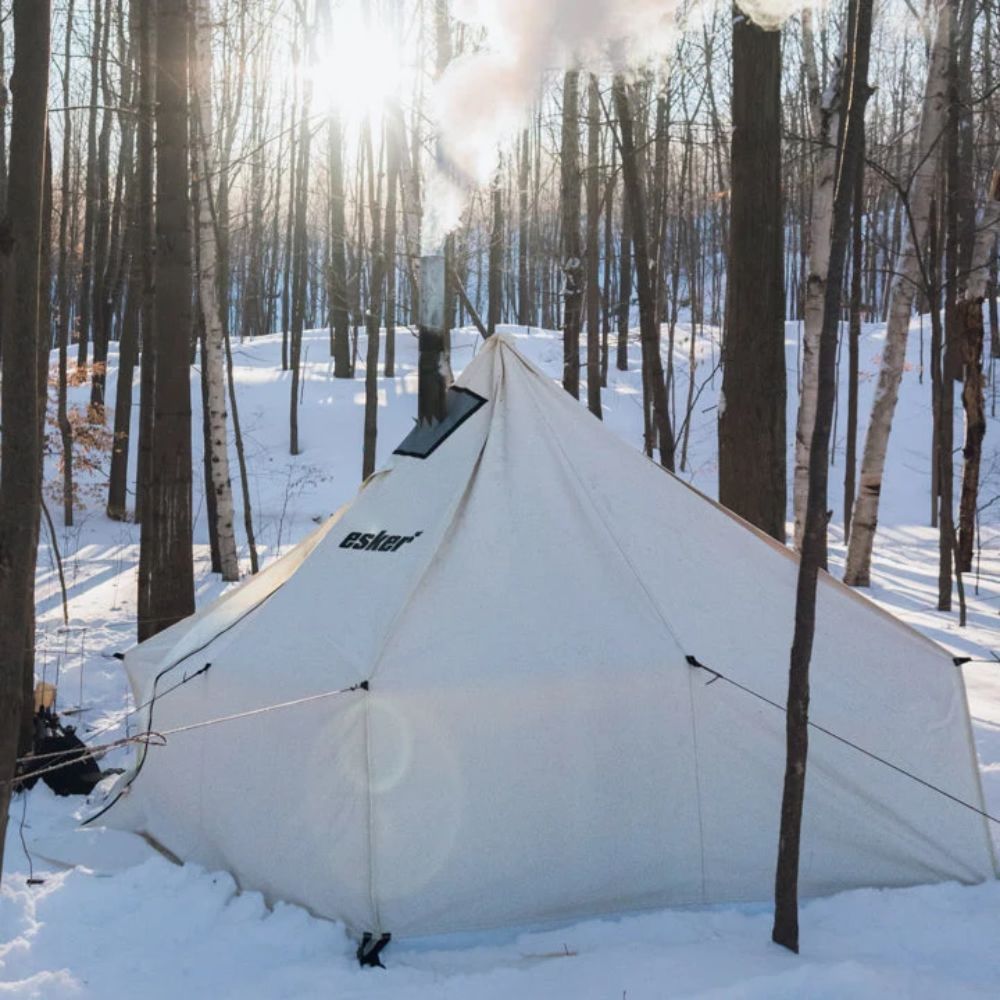
The easiest way into winter camping is a tent with a wood stove inside.
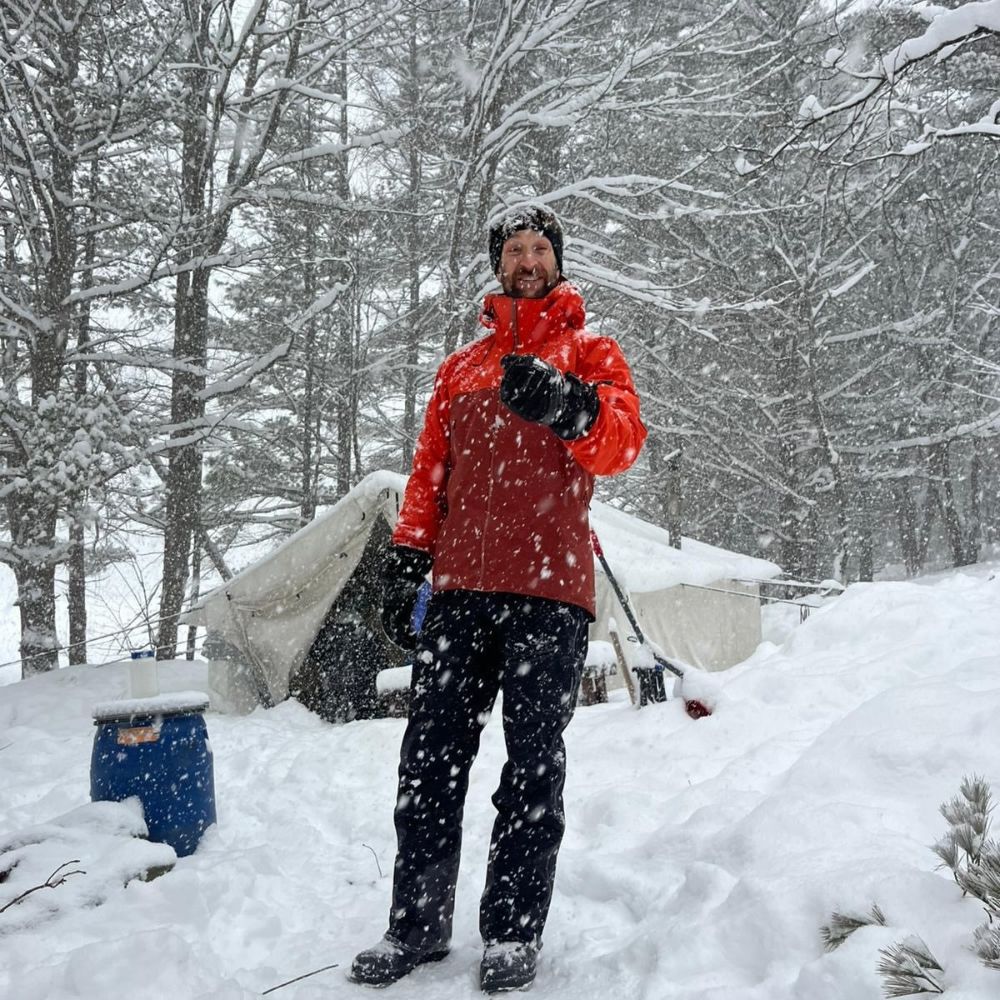
This is our introduction to winter camping, and it’s built for people who have always been curious but never quite sure where to start. We’re basing ourselves at a gorgeous forested spot in Muskoka that feels very wild but is close enough to civilization that you’ve got an easy way out. You’ll spend your first night under canvas on the Canadian Shield and learn the skills you need to feel confident experiencing more of winter in future. We’ll drive up Saturday morning and get to camp by late morning. The afternoon is all about learning how a winter camp works. Your guides will show you how to pitch a hot tent on snow, set up and light the wood stove, and split and process firewood, along with the other skills that keep a winter camp running smoothly.
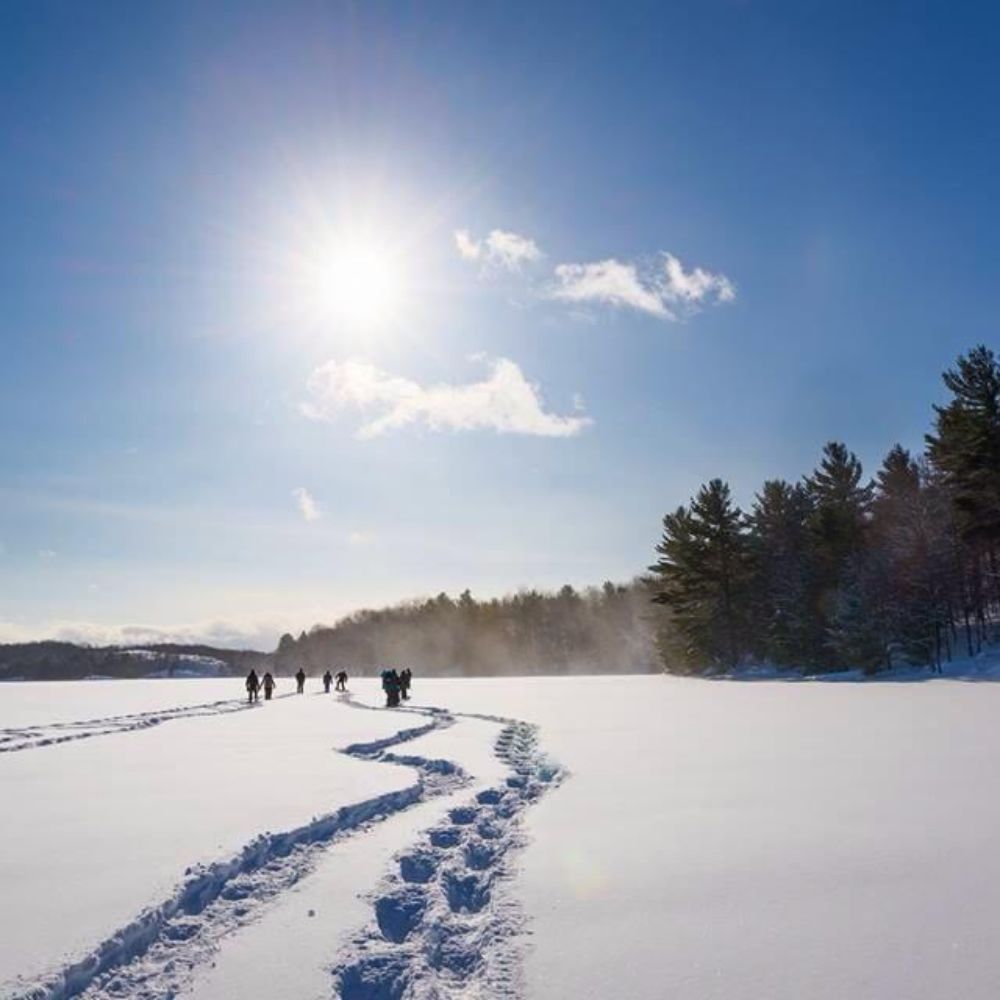
Once camp is set, we’ll explore the area by snowshoe, crossing frozen lakes, hiking forested trails and looking out for the beavers and moose that call this area home. . We’ll be back before dark, which comes early this time of year.
Then it’s dinner, a campfire, and an evening learning the small habits that keep you comfortable on a winter night. You’ll learn how to layer for sleep, what to keep inside your sleeping bag, and how to manage the stove overnight. With the stove going, the tent becomes a warm, cosy place to wind down before bed.
If you’re feeling adventurous, you can swap your tent for a night in a quinzee. A quinzee is a snow shelter made by piling up snow, letting it settle, and hollowing out the inside. Ours will already be built when you arrive. It sounds colder than it is: the snow walls block the wind and hold your body heat, so it’s much warmer inside than out. Tents are still the default, so the quinzee is there if you want it. If you try it, you’ll fall asleep surrounded by snow and wake up with a story to tell.
We’re staying at one of the best night sky viewing spots in Ontario so, before bed we’ll head out for some stargazing. If you’re lucky, you may even catch the Northern Lights.
Sunday starts early. After a hot breakfast and coffee by the stove, we’ll strap on snowshoes and head out along a different route, carrying our gear out on sleds behind us and start the drive back to Toronto having ticked an item of your bucket list.You’ll head home with real winter camping skills and your first night on the snow behind you.
For this adventure winter sleeping bags and pads are required, and are included in the price of registration. Snowshoes are also required, and included in the cost of the adventure.
All you need to bring our warm clothes and a bag. We share a detailed packing list in the adventure plan you’ll receive on booking.
Accessibility
Wilderness Union is committed to making our adventures as accessible as possible. If you wish to make an accommodation request relating to a disability or provide feedback, please do so by sending an email to info@wildernessunion.com
The Hot Tent: A canvas tent with a wood stove inside, the classic way to camp through a Canadian winter.
Winter Camping Skills: You’ll learn by doing, with your guides alongside you at every step. That means keeping your gear dry, staying warm around camp, and moving confidently on snowy trails.
Muskoka Under Snow: Muskoka in winter is a different place from the busy summer cottage country. The trails are quiet, the snow is full of fresh animal tracks, and you'll often have the forest to yourselves.
Saturday February 6
07:00 - 10:00 - Pick up close to Keele Station and drive to our Muskoka forest location.
10:00 - 17:00 - Make our way to camp. Have lunch and spend the afternoon learning camp skills and exploring the area
Evening - Dinner, fireside hangs and stargazing
Sunday February 7
Morning - Have breakfast at campsite then either snowshoe to discover more of the surrounding area or learn more skills - animal tracking, navigation, quinzhee building are just some of the things we teach.
Afternoon - Eat lunch and snowshoe back out from camp.
15:30 - 18:30 - Drive back to Toronto
Carbon Offsetting
Wilderness Union offsets the estimated carbon emissions of every trip by investing in a global portfolio of verified carbon reduction projects.
Accessibility
Wilderness Union is committed to making our adventures as accessible as possible. If you wish to make an accommodation request relating to a disability or provide feedback, please get in touch through our contact form.
Please read and understand this before registering
Cancellations made:
Loading...
Weather or emergency cancellations: If an event is canceled due to severe weather or other uncontrollable factors, members can receive a full credit to their account.
...
What’s a hot tent?
A hot tent is a canvas tent with a small wood stove inside, vented through a stovepipe in the roof. Once the stove is lit, the tent gets warm enough to hang up wet layers, cook, and relax in comfort while it’s snowing outside. Canvas breathes, so there’s much less condensation than in a nylon tent. It’s how people have camped through Canadian winters for generations.
How cold does it get?
The tent is typically just above freezing even if it’s much colder outside. We’ll kit you out with extra warm sleeping bags to keep you cosy overnight. You’ll find that all of the activities you do, keep you warm and our guides will send you to bed with a hot water bottle if you’re concerned you’ll be too cold!
What if I get too cold?
We’ll make sure you don’t but rest assured that we have a heated location nearby we can take you should anyone get too cold.
Where can I find important updates about this camping trip in the days leading up to it?
If you’re on the WU Discord, follow the thread for this adventure under the ‘Upcoming Adventures’ channel. Otherwise, look out for email updates from us and reach out with any questions.

You are now part of the Crew! Wilderness Union has moved to a membership-only model and a membership is required to go on all adventures. For more information, click here.
Continue to join the Crew (Free!)