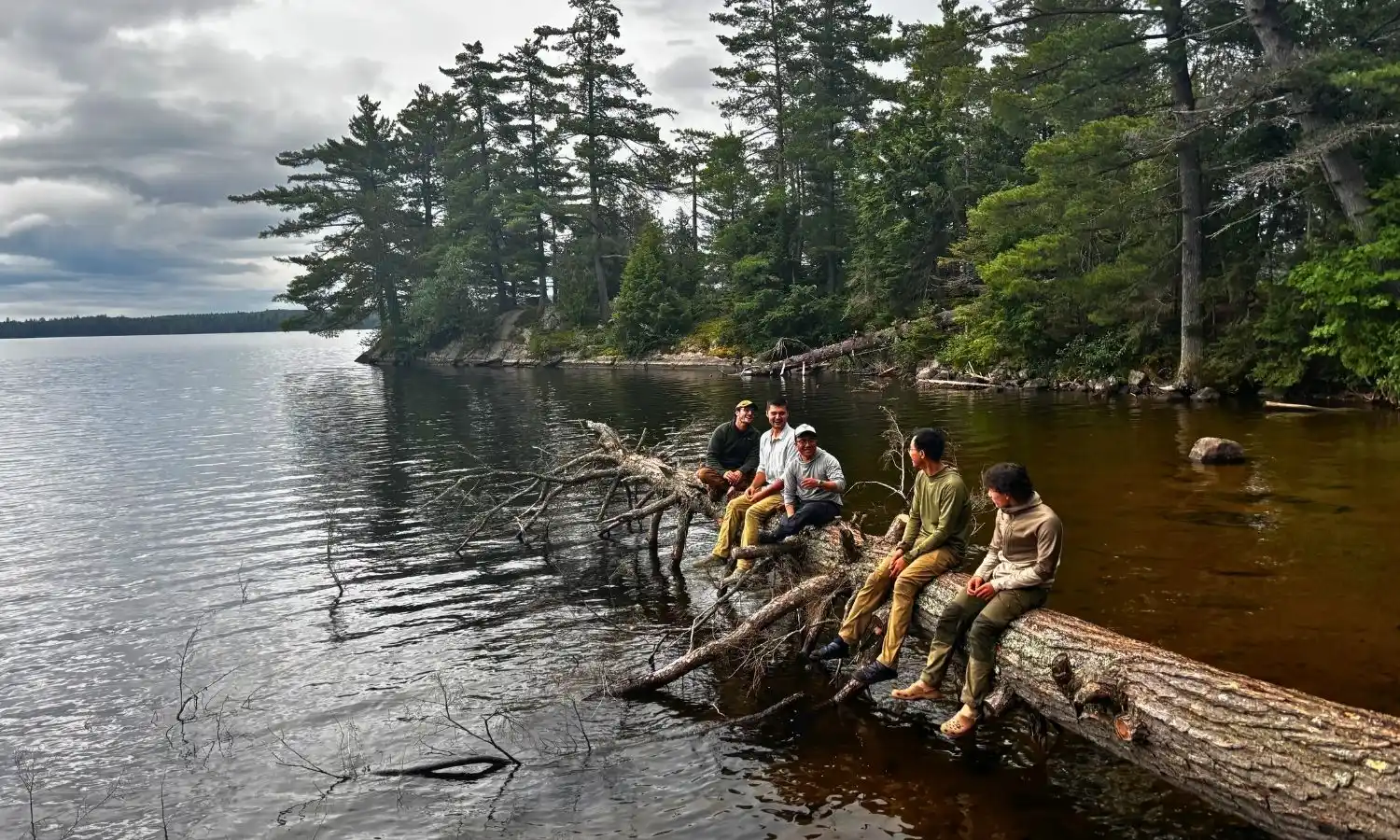
Algonquin Park is the jewel of Ontario’s Provincial Park network for good reason. It’s the size of a small country, has an incredible range of activities and allows you to quickly get somewhere very remote.
Here’s your no-nonsense guide about how to make the most of it...
Algonquin covers over 7,600 square kilometres of boreal forest, lakes, rivers, and exposed Canadian Shield. It is genuinely vast - the kind of place where you can paddle for a week and barely scratch the surface.
The Hwy 60 corridor, which runs through the southern edge of the park, puts you within reach of excellent day hiking within about three hours of downtown Toronto. You don’t need to be a backcountry veteran to have a serious day out here.
And the wildlife. If you want to see a moose in the wild, Algonquin is your best shot in Ontario, full stop.
The honest answer: you need a car, a charter (like Parkbus), or a group that has arranged transport.
There’s no GO Train or TTC option here. The park’s West Gate on Hwy 60 is roughly 260 km from Toronto, and the drive takes two and a half to three hours depending on traffic.
If you’re coming with Wilderness Union, we handle all transport in our 24-seat minicoach. You show up, we drive. That’s the easiest version of this trip.
Centennial Ridges Trail
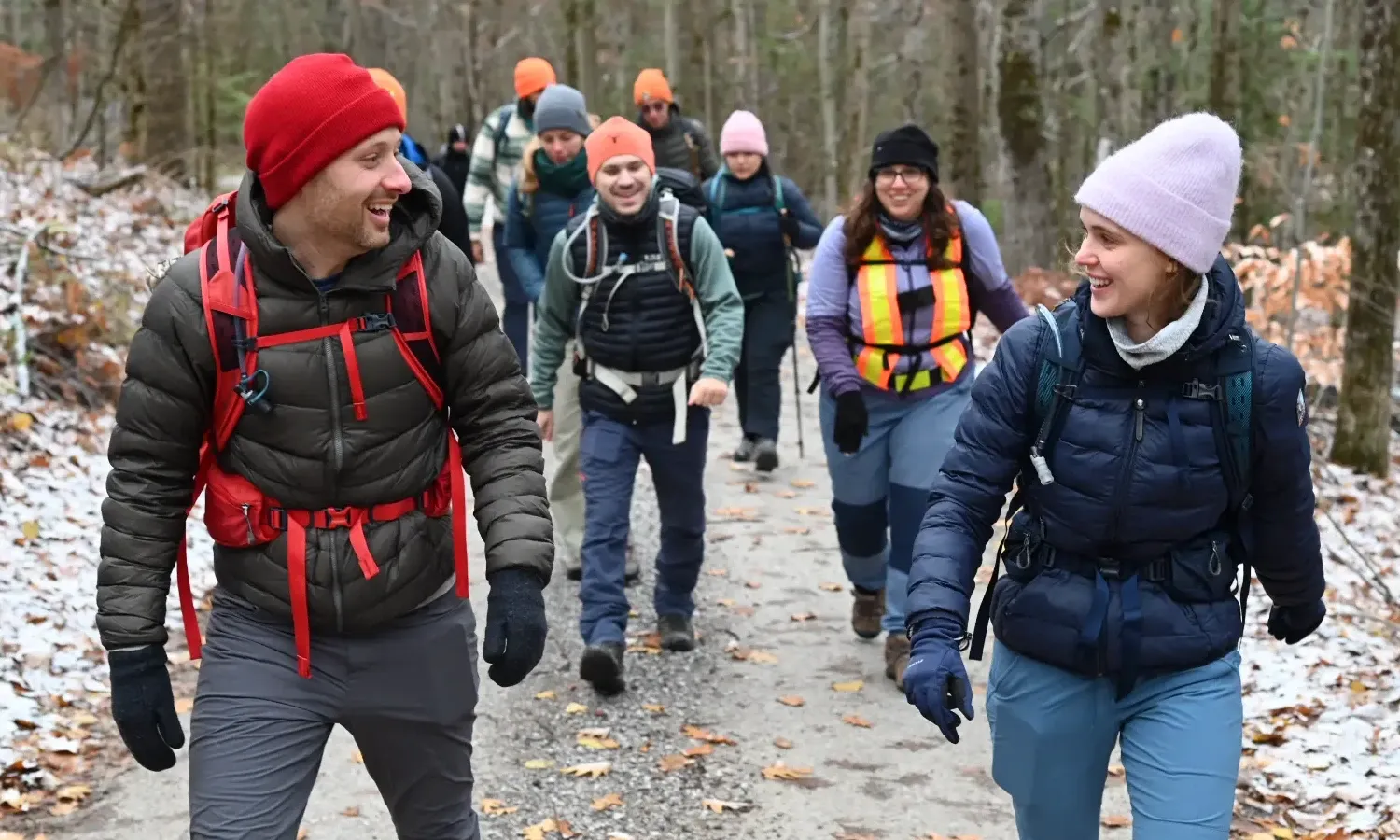
In my mind, this is the best day hike you can do in Algonquin. It’s 10.1 km, gains serious elevation (457m), and delivers views across the park that genuinely stop you in your tracks. On a clear day you can see for dozens of kilometres in every direction.
It’s a full day out. Note that this trail requires a vehicle permit — reserve at ontarioparks.ca up to 5 days in advance, because the parking lot fills up fast on weekends. Bring more water than you think you need.
Trail length: 10.1 km loop | Difficulty: Hard | Time: 3.5-5 hours
Lookout Trail
If you want a shorter option with a big payoff, the Lookout Trail is 2.1 km and takes under an hour. The view from the top looks out over a lake-studded valley. It’s genuinely beautiful, and accessible enough for most fitness levels.
Trail length: 2.1 km loop | Difficulty: Moderate | Time: 45-60 minutes
Track and Tower Trail
A longer, quieter trail through mixed forest. Less dramatic than Centennial Ridges, but you’ll find more wildlife here - beavers, otters, and plenty of moose tracks in the mud. One of the park’s best trails for seeing the Canadian Shield up close.
Trail length: 8.4 km loop | Difficulty: Moderate | Time: 2.5-3 hours
Beaver Pond Trail
One of the most popular trails in the park for good reason. You’re almost guaranteed to see beaver activity, and the boardwalk section is a nice touch. Great for first-timers or anyone who wants a flatter, easier route with a payoff.
Trail length: 1.9 km loop | Difficulty: Moderate | Time: 35-45 minutes
A full day in Algonquin demands proper preparation. This isn’t a city park.
You don’t need to overthink the gear. Wear proper hiking shoes or boots. Dress in layers. Bring more food than you think you need.
Fall is the answer, if you’re asking me. Algonquin in late September through mid-October is one of the most extraordinary natural spectacles in Ontario. The colour is genuinely breathtaking - maple, birch, and oak across the hills, all of it reflected in the lakes.
Crowds are lighter than summer, bugs are gone, and temperatures are comfortable for hiking.
Summer is excellent for paddling and camping. Late June through August is warm and accessible, though the park’s interior fills up quickly.
Spring (May-June) means black flies. Be prepared or go later.
Winter is another thing entirely. The park is stunning under snow, but you need the right gear and experience.
Algonquin is one of those places that’s significantly better with good company.
Organising it yourself means coordinating transport for several people, splitting the park fees, navigating an unfamiliar park with limited cell service, and dealing with logistics that eat into your actual hiking time.
The alternative is showing up with people who’ve already been, in a vehicle that’s already sorted, with guides who know the trails and the wildlife spots.
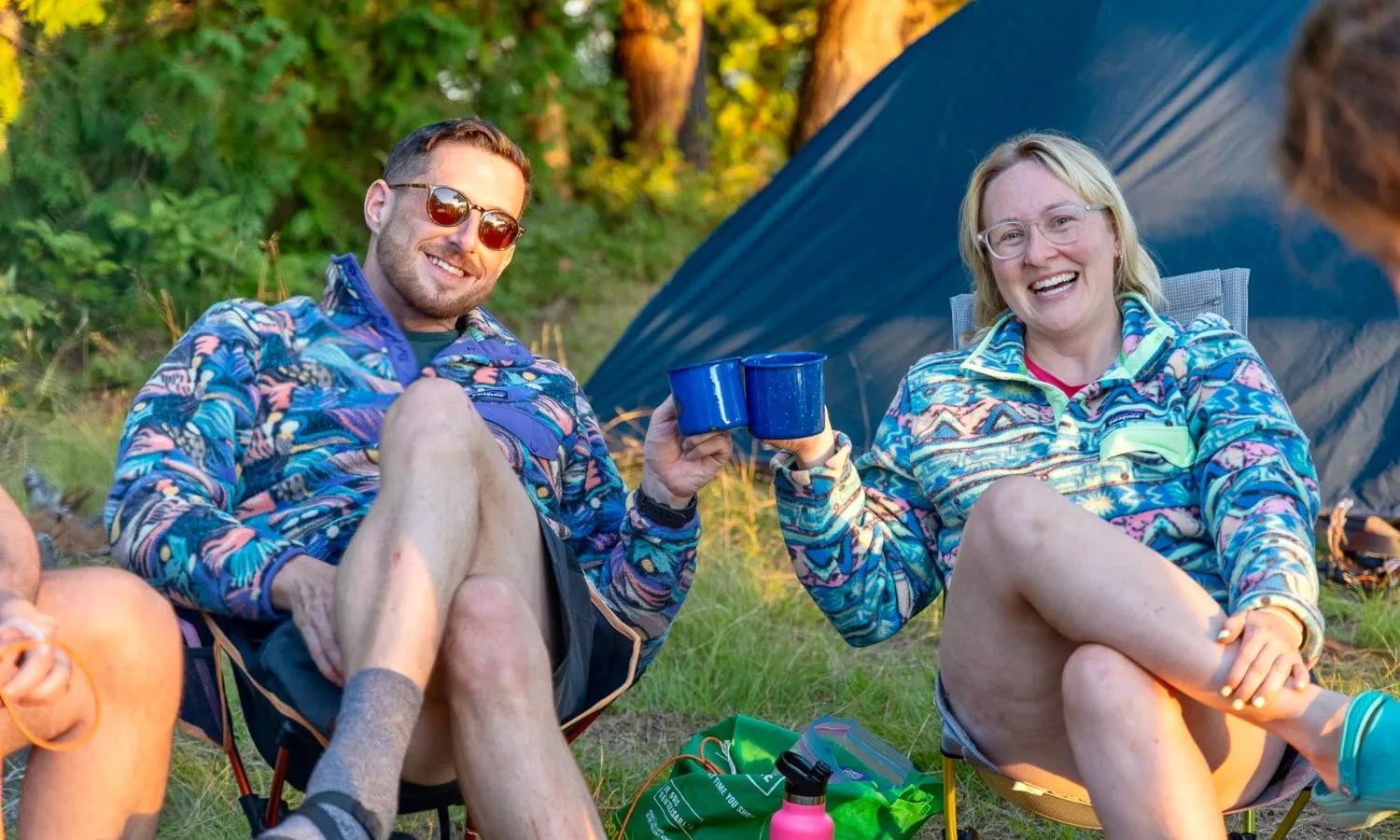
Wilderness Union runs regular trips to Algonquin throughout the year - day hikes, overnight camping, canoe trips, and multi-day backcountry expeditions. There’s no membership required to book your first trip. Sign up, show up, we handle the rest.
Most people come not knowing a single person in the group and leave with a friend group they didn’t see coming.
Is Algonquin Park worth a day trip from Toronto?
Yes, absolutely. The Hwy 60 corridor puts excellent day hikes within reach of a single day out. Give yourself a full day - don't try to cram it in as a half day. Leave Toronto early, aim to be on trail by 10am.
Can you get to Algonquin Park without a car?
Not easily on your own. There's no public transit to the park. Your options are renting a car, joining a group with organised transport (like a Wilderness Union trip), or arranging a charter. We run regular trips from Toronto with transport included.
Do you need a permit to hike in Algonquin?
You need a valid Ontario Parks day-use permit, purchased at the gate or online. At time of writing, the day-use fee is $21 per vehicle (2025 rate; check ontarioparks.com for current pricing). If you're travelling with Wilderness Union, your permit is included.
What wildlife can you see at Algonquin?
Moose are the headline act, and you have a genuinely good chance of spotting one, particularly around dawn and dusk near lakes and rivers. Loons, beavers, white-tailed deer, and black bears are all present. Bears are rarely an issue on day hikes, but carry bear spray if you're going into the interior.
When are the fall colours at their best in Algonquin?
Peak colour is typically late September to mid-October, depending on the year. It can shift by a week or two. The park's interior, accessible by canoe, tends to be more dramatic than the Hwy 60 corridor.
Can beginners hike in Algonquin?
Yes. Trails like the Lookout Trail and Beaver Pond Trail are excellent for beginners. The Centennial Ridges Trail requires reasonable fitness but no technical skill. The main thing to get right is preparation - proper footwear, enough water, and letting someone know your plan.
Ontario is extraordinary. Algonquin proves it like nowhere else in the province. Get out there.
Check out our upcoming Algonquin trips and sign up for your first adventure with Wilderness Union.